This month’s exploration of historical storytelling legacies and contemporary voices takes us to Ireland, which marks Samhain on November 1.
Global Voices, curated by Rozella Kennedy. This essay is also available in Spanish.
November, 2026: Across cultures and across time, words and stories have taught us how to survive, thrive, and make meaning of life. Before the printed page, communities and cultures used speech, song, theater, ritual, and other living forms to share knowledge, resist oppression, celebrate joy, and carry memory forward. My journey to learn more about and celebrate diverse writers and traditions from around the world brings us to Ireland this month. Come along!
Ireland’s Festivals of the Seasons
I’d heard of Ireland’s various seasonal festivals, but they were all a great muddle for me. So, I did some research to sort them out.
November 1 marks Samhain (roughly “SOW-in,” with “sow” rhyming with “cow”), the traditional beginning of winter in Ireland. What, winter already? you might ask. Here in the Northern Hemisphere, the winter solstice is still about seven weeks away, but Ireland’s old seasonal calendar took its cues from farming and herding rather than astronomy.
Three other great festivals marked the old Irish year: Imbolc (February 1, the beginning of spring), Bealtaine (May 1, welcoming summer), and Lughnasa (August 1, the beginning of the harvest). Samhain signified the end of the pastoral season: the harvest was done, cattle had returned from summer pastures, and the dark half of the year began.
The night before Samhain is Oíche Shamhna, the Irish name for Halloween, rooted in older traditions. The Catholic calendar’s All Saints’ Day and All Souls’ Day fall on November 1 and 2, also, of course, the dates of Mexico’s Día de Muertos, which unites Indigenous traditions and Catholic observances honoring the dead. The season of winter, inwardness, darkness. Consider also Danish hygge: candlelight, shared food, and good company as a way of making something welcoming out of the long winter nights.
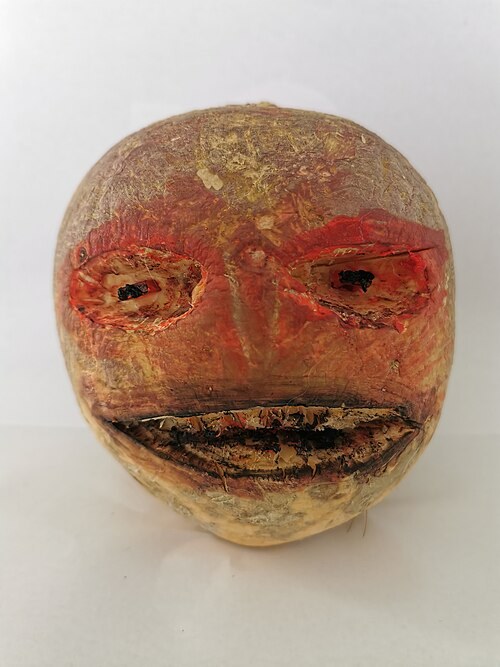
The Irish version of the Jack-o’-Lantern is named Stingy Jack, and he (or another frightening face) is carved into a turnip or other vegetable. It was the tradition of root vegetables carved with faces that Irish immigrants brought to North America, where the pumpkin was adopted. Read more here.
Irish people traditionally marked Oíche Shamhna with a combination of fun, games, and superstitions. They shared fruit and nuts, played marriage-divination games, and believed the dead might return to the family home for one night. At the same time, they feared evil spirits and avoided traveling alone. They also made ghostly masks and went house to house in disguise, entertaining their neighbors. In some districts, special crosses hung over doors to ward off bad luck. Irish and other European immigrants brought these customs across the Atlantic about two centuries ago. We can trace American Halloween to these roots.
In County Meath, about twelve miles from the Hill of Tara, stands Tlachtga, also called the Hill of Ward. Back in the 1630s, historian Geoffrey Keating (c. 1580–1644) described a great Samhain fire on this hill, from which every hearth in Ireland had to be rekindled. That may sound improbable, but archaeological excavations beginning in 2014 uncovered ancient earthworks and evidence of feasting and intense burning… maybe the great fire source? A direct connection to Samhain remains unproven. Regardless, the Irish people have “rekindled” the practice: since the late 1990s, Samhain gatherings have returned to the hill, with torches, processions, and storytelling. This commingling of traditional practices, along with the seasonal rituals, living alongside the spirits, and continually sharing stories and histories, all characterize Ireland’s distinct literary soul and legacy.
A Legacy of Poets, Scribes, and the Otherworld
Ireland’s ancient class of professional poets, the filid (singular fili), kept genealogies, advised and praised kings, and preserved law and lore. They were also deft satirists, admired and feared for their skill: legend credits a well-aimed verse with raising boils on its target’s face. Like the jeliw, or griots, we met in September’s essay about Mali, the filid were culture keepers whose authority rested on lineage and long training, and whose words carried political weight.
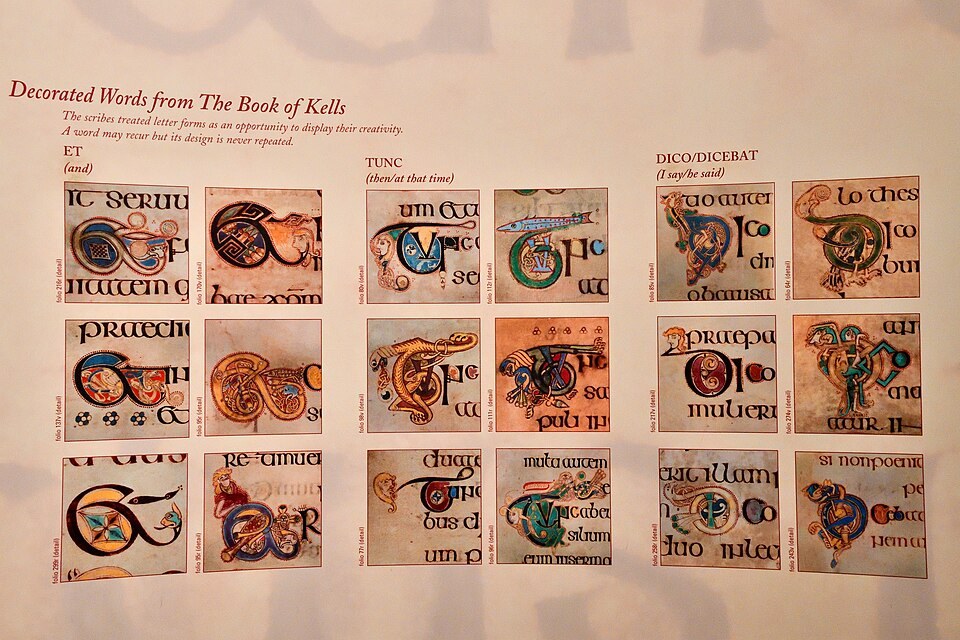
Christianity arrived in Ireland in the fifth century, bringing with it a growing manuscript culture. The Book of Kells, made around 800, is its best-known work. Other manuscripts preserved stories that had long circulated orally. The Book of the Dun Cow (compiled around 1100) and the Book of Leinster (around 1160) gathered tales, poems, religious writings, and historical lore. Both include versions of Táin Bó Cúailnge (The Cattle Raid of Cooley), one of Ireland’s great epics. Queen Medb goes to war over a prize bull, and a young hero, Cú Chulainn, holds off her army almost alone. Over the centuries, storytellers and scribes adapted the tale to their changing times.
Samhain turns up in these stories, too. In the tale Echtra Nerai (The Adventure of Nera), generally dated to the tenth century, King Ailill offers a prize to anyone brave enough to tie a band around a hanged man’s ankle on Samhain night. Nera is the only volunteer, and the dead man promptly asks him for water. From there, Nera’s adventure takes him into the hollow hill of the Otherworld, where he learns that the court faces an attack the following Samhain. The beliefs we’ve been discussing are all here: the dead have something to say, the Otherworld is open, and an ordinary person can find himself moving between the two.
Conquest, Famine, Independence, Preservation
Over centuries of war, land confiscation, and settlement, the Gaelic rulers were overtaken by the English. With their demise, Irish-language poetry shifted increasingly into farmhouses and taverns as the bardic schools lost their patrons. British Penal Laws further restricted Catholic rights, and the pressures of emigration and English-language schooling weakened the passing of the Irish language. And then the great potato blight brought An Gorta Mór of 1845–1852, which killed about a million Irish people and drove more than a million others to emigrate.
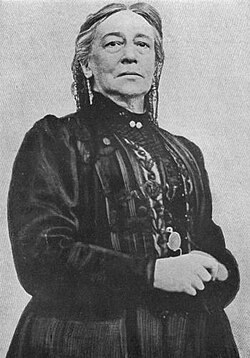
The cultural revival predated the political shift. In July 1893, a scholar named Douglas Hyde (1860–1949) co-founded the Gaelic League (Conradh na Gaeilge). He had learned Irish as a boy and spent years collecting stories and songs of his forebears. His publications included Beside the Fire (1890) and Love Songs of Connacht (1893). Around the same time, Lady Augusta Gregory (1852–1932) and W. B. Yeats (1865–1939) were building what would become Dublin’s national Abbey Theatre in 1904.
This renaissance of Gaelic culture helped shape the movement that led to the Easter Rising in April 1916, in which Irish republicans seized buildings in Dublin and proclaimed an independent republic. Though the rebellion was crushed within a week and several of its leaders executed, public opinion shifted towards the rebels. The 1919–21 War of Independence followed, leading to the treaty under which the Irish Free State emerged in 1922. Six northeastern counties remained in the United Kingdom as Northern Ireland. After a bitter civil war, a new constitution in 1937 created the office of President, a role to which Hyde was elected, unopposed, in 1938—a man of letters chosen to lead his nation. The state formally became a republic in 1949.
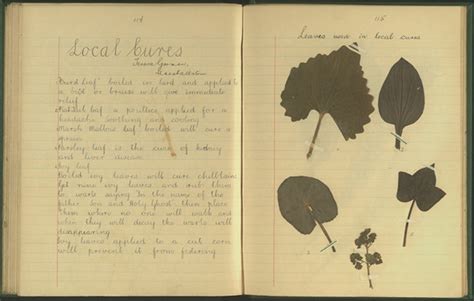
A priority for the new state was to record what was left of the old oral culture before it disappeared entirely. In 1937 the Irish Folklore Commission, working with the Department of Education and the teachers’ union, enlisted more than 50,000 schoolchildren in some 5,000 primary schools across the 26 counties to write down local history, stories, riddles, proverbs, songs, cures, and customs, gathered mostly from their parents, grandparents, and neighbors. The result, a record of family remembrances from 1937–39 known as the Schools’ Collection, is conserved in handwritten copybooks and bound volumes. Much of its 740,000 pages can be read for free online.
Twentieth-Century Literary Voices
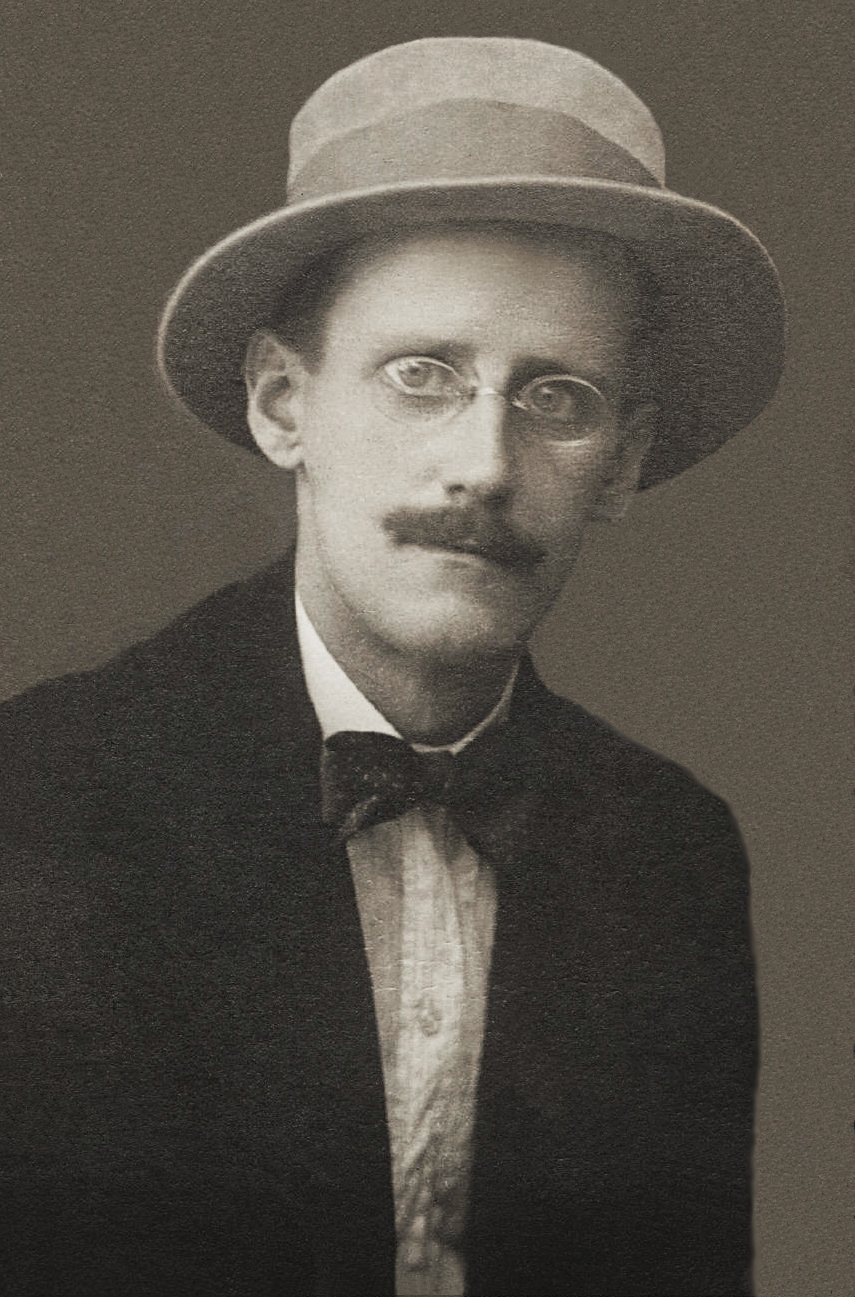
As a long-ago student of English literature, I was of course familiar with some of Ireland’s nineteenth- and twentieth-century greats. W. B. Yeats (1865–1939) brought folklore into his poetry and plays and John Millington Synge’s (1871–1909) plays (Riders to the Sea, The Playboy of the Western World) integrated rural Irish life and speech. James Joyce’s (1882–1941) epic experimentations with form (Ulysses, Finnegans Wake, and more) explored the intimate encounters, social constraints, and hidden internal narrative of Dubliners. Seamus Heaney (1939–2013), recipient of a 1995 Nobel Prize in Literature, wrote about rural life, historical memory, and the violence in Northern Ireland. These divergent works all grappled with familiar concerns of belonging, memory, the dead ever-present.
As an English major, I barely noticed that so many of these writers worked in the language of Ireland’s conquerors. Looking back through a postcolonial lens, that deserves more attention. English had become the language of government, education, and economic advancement, while famine and emigration devastated Irish-speaking communities. These writers inherited a language whose dominance had been imposed over generations, then used it to convey Irish experience, speech, and storytelling.
Important literature was also being written in Gaelic. In Máirtín Ó Cadhain’s (1906–1970) Cré na Cille (1949), the inhabitants of a graveyard continue their gossip, quarrels, and grievances after death—a scene that brings us back to Samhain and its companionable, sometimes contentious dead. Brian O’Nolan (1911–1966), better known as Flann O’Brien, wrote in both languages. His An Béal Bocht (1941; The Poor Mouth), published under the name Myles na gCopaleen, satirized rural memoirs celebrated as records of authentic Irish life.
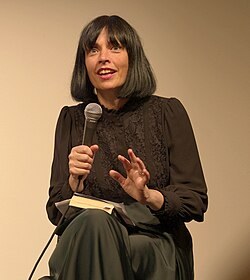

Though most of the names we associate with modernizing Ireland were men, there is a tradition of women’s literary arts, often tied to lifeways in intimate and folk iterations. Back in Gaelic Ireland, the caoineadh, or keen, was a spoken and sung lament improvised over the body at a wake. Its greatest surviving example comes from Eibhlín Dubh Ní Chonaill (c. 1743–c. 1800) of Derrynane, County Kerry, daughter of the poet Máire Ní Dhuibh (c. 1702–c. 1795) and aunt of Daniel O’Connell. On May 4, 1773, her husband, Art Ó Laoghaire, a former officer in the Hungarian Hussars, was shot dead by soldiers after a feud with Abraham Morris, a powerful local official. The feud began under the Penal Laws, which forbade a Catholic to own a horse worth more than five pounds; Art refused to sell Morris his mare for that sum. A coroner’s inquest later found Morris and the soldiers guilty of willful murder. Eibhlín Dubh composed Caoineadh Airt Uí Laoghaire (The Lament for Art Ó Laoghaire) extempore, with verses from Art’s father and sister, and it survived in the mouths of people in Munster before anybody wrote it down. The English poet and critic Peter Levi (1931–2000) called it the greatest poem written in Ireland or Britain in the eighteenth century.
Long preserved through oral transmission, the poem became the subject of Doireann Ní Ghríofa‘s (b. 1981) A Ghost in the Throat (2020), where the author interweaves a search for the earlier poet’s life with her own experience of motherhood.
Peig Sayers (1873–1958), a storyteller on Great Blasket Island, off County Kerry in Ireland’s southwest, dictated her memoir and hundreds of traditional folkloric tales. Generations of students were familiar with her memoir, and her other works, some inserting humor in the face of starkness.
Lady Augusta Gregory (1852–1932) brought Irish legends to English-language readers and helped establish modern Irish drama through her plays and her work as a co-founder of the Abbey Theatre. We also want to mention Edna O’Brien (1930–2024) who challenged the moral and social restrictions governing Irish women’s lives by exploring women’s desires, relationships, and struggles for self-determination in works such as The Country Girls (1960) (which was, by the way, banned in Ireland).
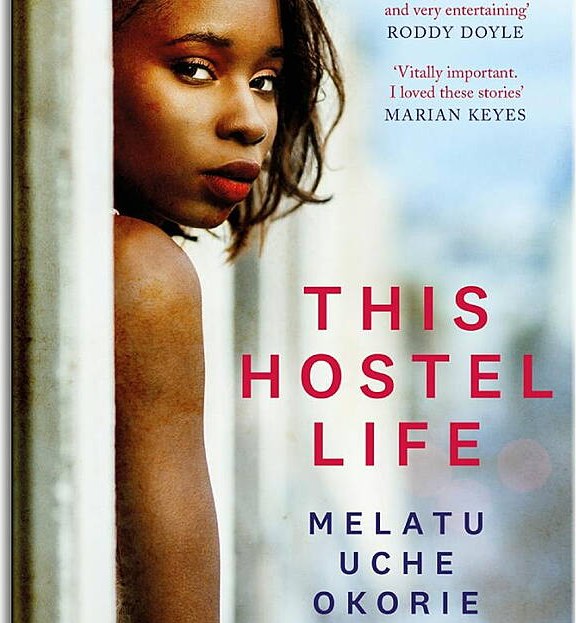
Ireland’s literary life also reflects its changing population, as immigration has brought people from across the world, particularly since the 1990s. Nigerian-Irish writer Melatu Uche Okorie‘s (b. 1975) collection This Hostel Life (2018) examines racism, bureaucracy, and the daily circumstances of migrant women and people seeking asylum. And of course, Ireland remains in familial dialogue with American writers of Irish descent, including Eugene O’Neill (1888–1953), Alice McDermott (b. 1953), and Frank McCourt (1930–2009), whose works straddle the Atlantic in emotion and memory.
Poetics
For many, the mere mention of the word “Ireland” conjures up a cup of hot tea, a cozy blanket, and a book of poetry. The tradition remains alive today, as old sagas keep finding new interpreters. Thomas Kinsella’s (1928–2021) The Táin (1969), with brush drawings by the painter Louis le Brocquy, brought the epic to twentieth-century readers. Before he won the Nobel Prize in 1995, Seamus Heaney (1939–2013) published Sweeney Astray (1983), his version of the medieval Irish Buile Shuibhne, itself the tale of a king cursed by a saint to wander in madness and live in the trees like a bird.
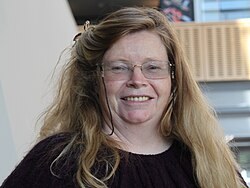
Nuala Ní Dhomhnaill (b. 1952) was born in Lancashire, England, to Irish parents and grew up in the Irish-speaking district of West Kerry. She writes her poetry only in Irish. The Fifty Minute Mermaid (Gallery Press, 2007), translated by Paul Muldoon (b. 1951) and printed with the Irish on facing pages, develops mermaid folklore into a whole sequence about a race of merpeople who have left the sea and live uneasily among humans on dry land. She served as Ireland Professor of Poetry from 2001 to 2004, and in 2018 she became the first woman to receive the Zbigniew Herbert International Literary Award.
Eavan Boland (1944–2020) spent her career writing ordinary women’s lives into a national poetry that had long used a woman as its symbol for Ireland while leaving little space for women poets. Her prose book Object Lessons (1995) sets out that argument, and her poems, including those in Outside History (1990), make it line by line. I am sure I am missing many more contemporary writers who deserve a read!
A Final Word
The Republic of Ireland today is home to about 5.5 million people; the 1998 Good Friday Agreement helped end three decades of conflict centered on Northern Ireland (the Troubles), and in October 2025, voters elected Catherine Connolly in a landslide, a Galway barrister who learned Irish as an adult, as the tenth President of Ireland. At her inauguration on November 11, 2025, she pledged that Irish would be the first working language of the president’s residence, and she quoted the saying: Tír gan teanga, tír gan anam, a country without a language is a country without a soul.
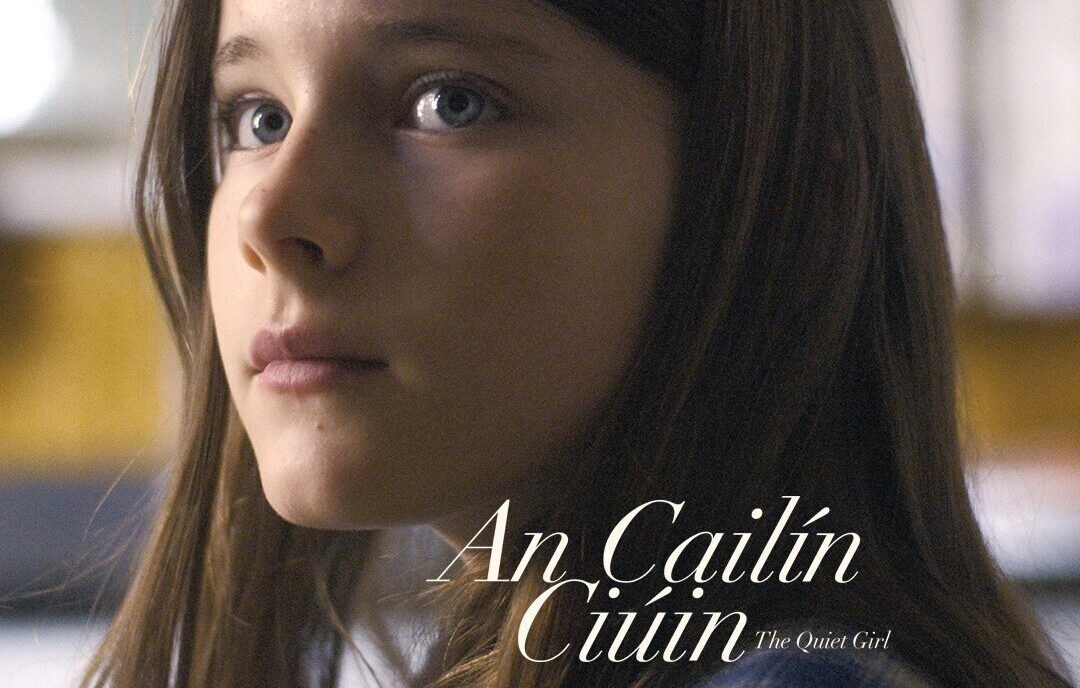
The rap trio Kneecap and the Oscar-nominated film An Cailín Ciúin (The Quiet Girl, 2022) are bringing spoken Irish to new audiences. Like elsewhere, a dense and ancient culture finds new relevance in our times.
Other Sources
- Samhain and Halloween customs — National Museum of Ireland
- The Schools’ Collection — Dúchas.ie, National Folklore Collection, UCD
- Táin Bó Cúalnge from the Book of Leinster — CELT, University College Cork
- Hill of Ward (Tlachtga) — Wikipedia
- Population and Migration Estimates, April 2026 — Central Statistics Office
As a member of the San Miguel Writers’ Conference and Literary Festival’s Bridge Builders Committee, I curate a short monthly series for the Festival’s newsletter highlighting Global Voices. That brief overview is published in English and Spanish in the newsletter; the longer essays publish here, in English and in Spanish. Reality Check: While I have not and cannot read all the books I refer to, I am savoring the discoveries as I read, listen, watch, and explore what I can on this global cultural voyage. That’s the spirit of this venture, so I hope it brings you some discovery, delight, and appreciation for our wonderful world of creative people and traditions. I’m also the founder of Brave Sis Project, and reside in San Miguel de Allende, Mexico.